
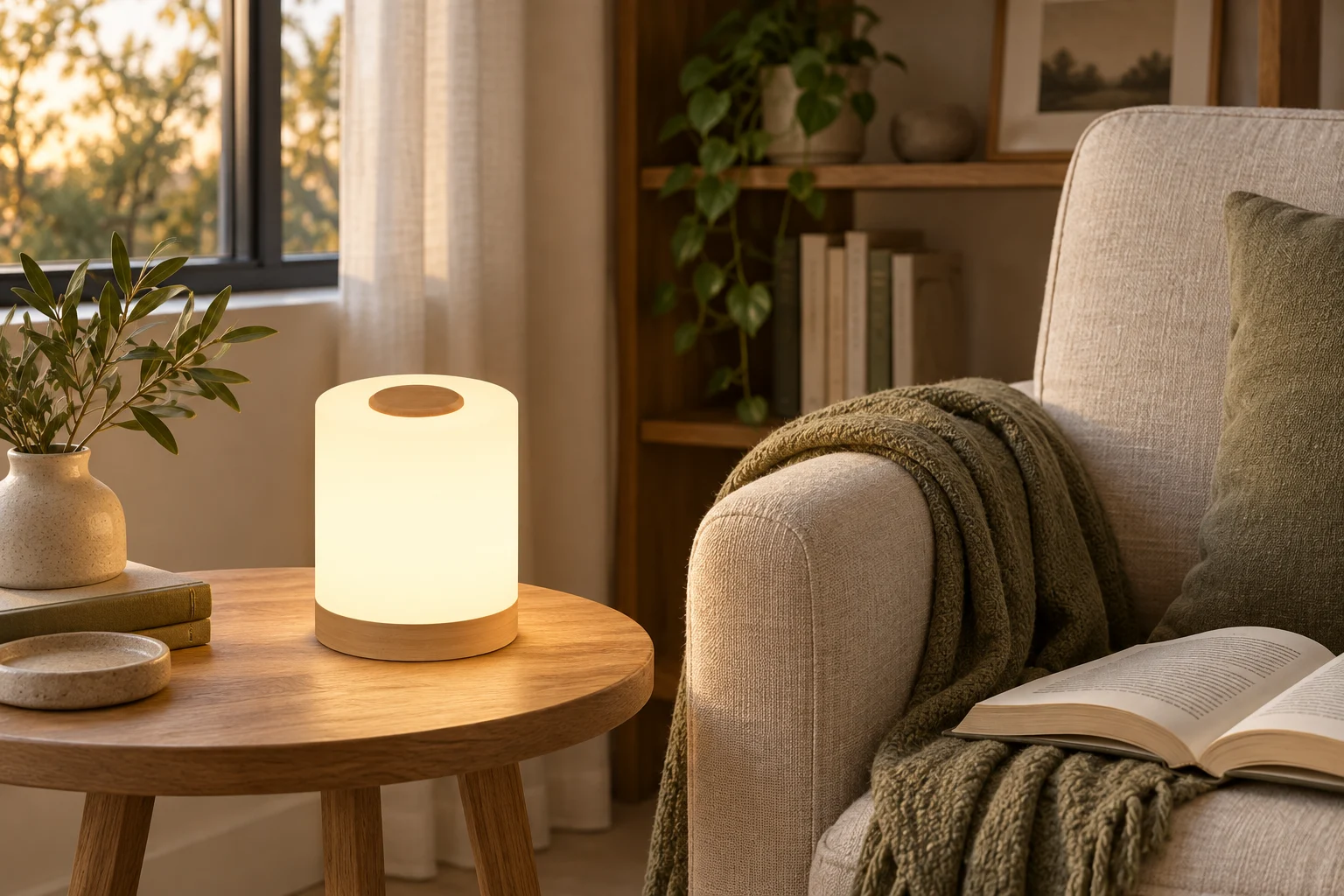
Keep the lamp within reach, leave room for the book and separate a warm atmosphere from the light needed on the page.
A reading corner is often planned around the chair, then finished with whatever lamp fits the side table. But the best position for a lamp is not always the position that looks most balanced in a photograph. It also needs to leave room for a book, stay within reach and work with the light already in the room.
A small ambient lamp can make that corner feel more inviting. It should not automatically be presented as the only light someone needs for reading. Begin by separating the atmosphere you want from the illumination needed on the page.
Decide what the lamp needs to do
During daylight, a window may provide much of the useful light. After dark, the same chair may need a separate task light or suitable room lighting. Try the arrangement at both times instead of judging it from a bright daytime photograph.
For a retailer creating a display, this distinction also matters in the description. A softly glowing lamp can be shown beside a book without claiming that it delivers a measured reading-light performance. Brightness, glare comfort and any eye-care claims need appropriate supporting information, not just a warm-looking scene.
Let the real product set the scale
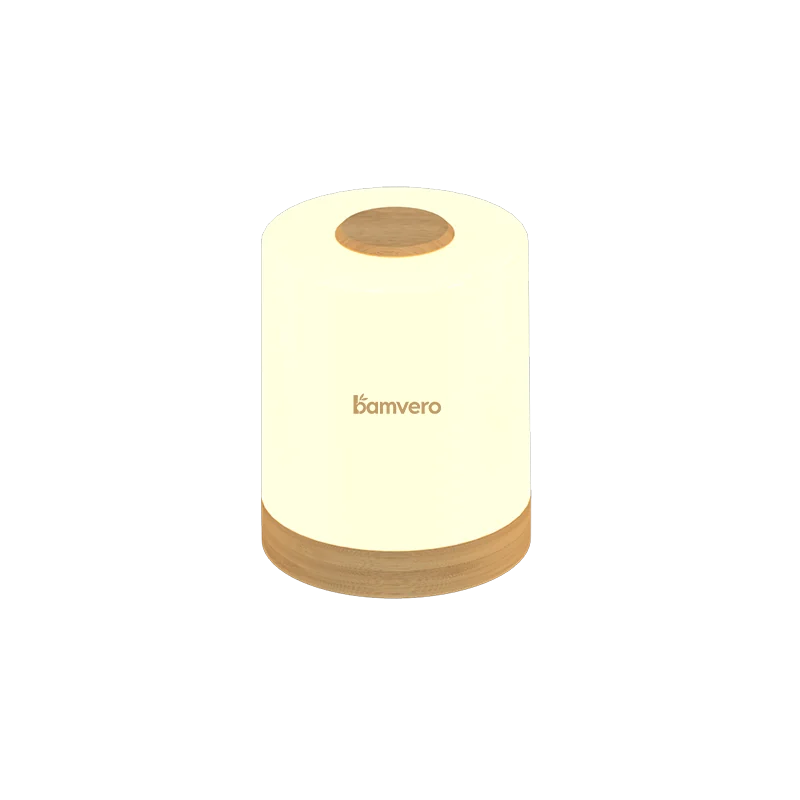
The T2633 rechargeable bamboo touch table lamp is a small cylindrical design with a bamboo base, ABS shade and a round control area on top. Its listed dimensions are 82 × 82 × 100 mm. That is a compact accent light, not a tall adjustable reading lamp.
Use those dimensions when planning a side table or retail vignette. A close-up can make a small lamp look much larger than it is. The product photo below shows the actual design; the opening room illustration is an AI-generated placement concept and should not be used to judge exact scale or light output.
The available description supports warm ambient light and touch dimming. It does not establish a specific illuminance on a book. If reading performance is central to your buying brief, ask for the relevant measurements and test the sample in the intended arrangement before making that claim.
Place it where a seated person can reach it
Sit in the chair and reach naturally toward the table. A lamp that requires leaning around a drink or stretching behind the chair is inconvenient, even if the composition looks tidy. Leave a clear area around the top control, and keep loose objects from crowding the base.
T2633 uses a tap on the top control for on/off and a press-and-hold for stepless dimming. Try both actions from the seated position. The useful test is whether someone can operate it comfortably without shifting the lamp or disturbing everything else on the table.
Also check the view from the chair, not just from across the room. Move the lamp slightly if its luminous surface is distracting, and keep adequate light on the reading material from an appropriate source. Personal comfort is worth testing with the actual sample rather than assuming one placement will suit everyone.
Plan where charging happens
The rechargeable design allows cordless placement after USB-C charging. That can keep a small side table less cluttered during use, but it still needs a practical charging routine. Decide where the lamp will be charged and where its cable will be stored when it is not needed.
The listed 1200mAh battery capacity does not by itself tell you how many evenings of use to expect. Ask for charging time, input requirements and runtime at the intended brightness. A low-brightness display and a brighter setting may not share the same runtime, so record the condition behind any figure you plan to publish.
For a showroom or shared lounge, make charging part of the staff routine rather than leaving an unexplained cable on the display. Confirm which accessories are included in the quoted pack. Props and power equipment used in a styled photograph are not an inclusion list.
Build the display around a believable routine
A chair, a book and enough clear tabletop space usually explain the setting better than a crowded collection of accessories. For a shop, show the lamp switched off as well as lit so customers can see both its material and its effect. Keep the real product photograph available alongside any concept scene.
If you are comparing a larger decorative shape, the T2631 pleated table lamp offers a different silhouette. Compare the physical samples and dimensions rather than assuming that the larger shade automatically means stronger reading illumination. The lamp collection provides other formats to consider without making their lighting roles interchangeable.
Take the room brief into the buying conversation
For several reading corners or a retail display programme, note the side-table size, available room light, access to power and intended operating hours. Photographs of the empty setting can help explain the arrangement, but they do not replace checking a sample in that space.
Use the inquiry button to discuss T2633, or request a product shortlist with the setting, quantity and destination market. That gives the selection a useful starting point: a lamp that fits how the corner will actually be used, with any remaining performance and supply questions clearly identified.
Planning a small lamp display or room setup?
Keep the lamp within reach, leave room for the book and separate a warm atmosphere from the light needed on the page.
Discuss T2633 placement